Sunday, November 18, 2012

Israel Discussion in a Kosher Restaurant

Those of you who follow what's going on in the middle east know that things between Israel and Gaza are not looking pretty right now. There's a conflict going on that involves rockets, the death of innocent civilians, and the possibility of a ground war. All in all, not so much fun. Also, not all that new. This type of thing has been happening on and off, pretty much since Israel first became a state. But that's not the point. The News isn't telling you that. The News is telling you about the escalating conflict and stuff. Because it doesn't make a good story to say, "Israel and Gaza are going at it. Again." This is not meant to undermine the violence going on there. This is terrible stuff, and the fact that it isn't new doesn't make it any less terrible.

Anyway. My uncle and his family live in Israel on the kibbutz Ma'agan Michael, a small socialist community based on the idea of farming the land (they also have a plastic factory that makes toilets). The kibbutz is to the north of Israel, near Haifa for those of you who know where that is. To give some perspective, Gaza is much further south. But with close family living in Israel, this type of conflict makes my family worry.

The issue is, my mom is extremely liberal and seriously faults Israel for its occupation of Gaza. My Zaydie (her father), is an Orthodox Jew, who is liberal in most social and economic things, but orthodox in those things Jewish. He doesn't think Israel is completely perfect, but if you criticize Israel too much around him, he'll snap. As you can see, in a family with a large stake in what happens in Israel and largely conflicting view points, there might be a bit of conflict. Just a bit.

This came to fruition today after lunch, while sitting in a kosher restaurant (where my Zaydie's views are generally more popular). My mom was talking with her parents about my uncle and Israel and what was going on there. It somehow came up that my uncle had been kind of pushing my grandparents to move to Israel. As you might expect, considering that most people who's parents live nearby don't want their parents to move out of the state, much less to a war ridden country across the globe, my mom was vehemently opposed to the idea of them moving.

At one point, she mentioned that she would never want to live in a country in which the government actively oppress their population. My Zaydie clearly took a bit of offence, but at that point, things were still relatively civil. From there, they got to how the Jews who moved to Israel originally got their land, whether they had bought it from the Palestinian's or stole it from them (sounds a bit like conflict surrounding the US and the Native American's, huh). My mom talked about how the government forced Palestinians off their land to give the land to people who immigrated to Israel. My Zaydie compared it to how the US, "stole one-third of our land from Mexico, but we're friends with Mexico now and the US isn't a bad place." And things kind of spiraled downhill from there. Very quickly.      

Personally, I'm not sure what to think about all this. I've grown up listening to both my mother's perspective and my Grandfather's. At my parent taught, cooperative Hebrew school, I've had classes that do their very best to give both sides of the conflict. I go to a Jewish sleep-away camp that stresses labor Zionism  the idea that there should be a Jewish state and that Jews should move to Israel and farm the land. But even at this camp, the counselors do their best to teach us that Israel isn't perfect.

Honestly, I don't think that this is an issue with one right answer, if any right answer. At this point, both the Israelis and the Palestinians are at fault. Neither side is even close to perfect. You can't really play one side as the victim and one side as the persecutor. It doesn't work that way.

Unfortunately, that is what people have the tendency to do. Many people see this as either the Israelis oppressing the Palestinians or the Palestinians are bombing the Israelis, unprovoked. People tend to pick the extremes in a conflict that is no where close to black and white. Both my mom and my Zaydie understand that actually. But a lot of people don't

The thing about my mom and Zaydie's argument is that it isn't all that rare. This is the type of things that really has the potential to divide families. And in arguments about this, no one will win. No one will persuade the others that they're right and the others are wrong.

  israel_god_wants_to_know_who_wants_it_more
http://www.flickr.com/photos/mrdevlar/4921828661/

Sunday, November 11, 2012

Capture the Fall


This week I made my Capture the Fall video for media class. I used a flip camera to film it.

Here's a list of my shots:
1. colorful trees
2. my brother riding his bike
3. my mom walking our dog
4. a lawn display
5. a leaf pile along the street
6. fallen leaves
7. a spring with leaves in it at a park
8. my brother swinging
9. a tiny stream at the park
10. my brother walking
11. my brother throwing pine needles
12. a pretty sidewalk chalk drawing
13. more fallen leaves

Unlike some of the videos that I've seen for this project, my video doesn't tell a story or have any overarching theme besides fall. The clips that I used were things that I associate with fall in general. My favorite clip is the one of my brother throwing pine needles into the air. It looks staged, but it's actually not. It's just the type of thing that my brother does. I brought the camera to the park with me to film and  looked over at my brother and that's what he was doing.

There are a couple things that I didn't put into my Capture the Fall project that I wish that I could have. For me, fall is strongly associated with waking up and coming homes from school when it's dark. Unfortunately I kept forgetting to take my camera with  my to school, so I never got that footage.

One of the biggest challenges I faced when making this video was using the editing software, WeVideo. This is only the second video that I've ever edited so I still don't really know what I'm doing. I don't own any editing software so I had to use a free online software, WeVideo. WeVideo proved to be very glitchy. Some  of the clips would freeze as I tried to edit them so that when I tried to watch it in the editor, it would go through a couple clips and then freeze. In addition, the editor wouldn't play the transitions that I inserted between clips. Although the transitions wound up working when the video was exported to YouTube, I could only hope that they worked right because WeVideo would just skip over them.  

Monday, November 5, 2012

Leftover Soup

I spent the weekend in New York city with my family, going to see the Broadway show Newsies. We had a great time at the show, but I also had an experience this weekend that really moved me.

We rode the bus in to New York and walked to our hotel, stopping at a restaurant for dinner. My brother ordered soup that he decided he didn't like and didn't eat. Although nobody wanted the leftover soup, my dad took it to go. As we walked from the restaurant to the hotel, we passed a young woman, sitting under a store awning with a sign saying something along the lines of "Hungry and Broke, Please Help". She was sitting hunched against the wall in a pair of jeans and a flannel shirt, her blond hair whipping around her thin face in the wind. My dad offered her the leftover soup. Often in these situations, the homeless person will respond with thank you, god bless you, god bless your family, have a nice evening, and on, but she simply said, "yes, thank you."

First of all, she must have been freezing. It was dark, cold, and windy, and I was shivering in my winter coat, so I can barely imagine how cold she must have been in just a flannel shirt. But what really struck me in the encounter was a tone in her voice. As she accepted the soup, there was a something that crossed from thankfulness into desperation. The "yes" was an exclamation, the "thank you", tagged on to the end in an attempt to save face, to cut that desperation a bit.

My mom was also moved by the encounter. To her, it was less about the woman's tone of voice and more about her age. Often, the people you see on the streets at night are middle aged men, but this girl looked like she was only a few years older than me. After we walked another block, my mom decided to go back and give her twenty dollars.

Interactions like the one described above always leave me feeling guilty. As a privileged teen, I never have to worry about where my next meal is coming from. At the same time, in these situations, I think that people have the propensity to look down on the homeless people they meet. They feel bad for them, but they also feel better than them. At my summer camp, we have spent days discussing this; whether it is better to give money to a person on the street, or to donate money to an organization that helps homeless people. The subject also came up of how it's difficult, but important to remember that you aren't any better than the people to whom you're giving your money, just in a different situation.

I don't know what this woman's story was, why she was on the street, or even how she felt about being there. That's something that I'll never know. But as we walked around New York city for the next two days, I saw an amazing amount of homeless people on the streets, many more than you see walking around DC.

According to the Coalition for the Homeless, an advocacy and service group, homelessness in in New York City is currently at its highest level since the Great Depression. In June 2012, there were 46,600 homeless people sleeping in municipal shelters each night, including 11,200 homeless families with 19,200 homeless children. This is not including the number of unsheltered homeless people, as there is no accurate count of unsheltered homeless people in New York City. Studies show that the primary cause of homelessness, especially among families is a lack of affordable housing in New York City. In addition according to a report published by the Substance Abuse and Mental Health Services Administration, 92.9% of chronically homeless people in New York City are African American and 82.3% are male. They found that people experiencing transitional homelessness (one short term stay at a homeless shelter) are also predominately African American and Male.

I don't think that my experience that night has really changed how I'm going to behave in the future. It hasn't left me any more inclined to run out and volunteer at a homeless shelter or to hold a canned food drive. I think that really this experience has simply helped me relate more to the situation of homeless people. We all tend to relate the most with people with whom we feel we have something in common. I think that I saw something of myself in that cold, desperate young woman. I have no idea what it was, but it was there. And that something made her, and through her, the issue of homelessness, seem more real to me.


An Apparently Homeless Young Woman Sits Crying in a Doorway, Ignored by the World.
Homeless Girl

Sunday, October 28, 2012

Don't Burst my Bubble

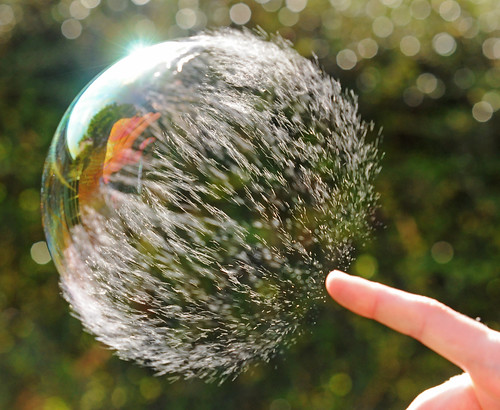
I live in a bubble. I think that it's safe to say that most of us do in CAP. This bubble includes all aspects of my life--my school community, my family, the neighborhood in which I live, my friends, my religious community, even my socialist summer camp. In this bubble, everyone believes pretty much the same thing.

That is not to say that people aren't opinionated, in fact, in bubble land, most people have extremely strong opinions, they're just all the same.

This weekend, I went on a trip with my Jewish community, a cooperative, parent run group, to a lodge on the Appalachian Trail. The professions of the adults present ranged from union organizers to a civil rights lawyer to a NASA scientist, to a professor of Astronomy at Johns Hopkins University, to an education policy consultant, to an urban planner. These were adults from a huge variety of professional fields. On this trip, I attempted to work on my crystal ball assignment, researching the demographics of Pennsylvania and using the information to predict the result of the upcoming election in Pennsylvania. Upon my explanation of the assignment, the adults present launched into a long conversation about the Pennsylvania elections, from the talking points of the U.S. Senatorial election, to the union's position about president Obama, to their own experiences canvasing there.

After the conversation, which covered a lot of issues but was really a bunch of adults agreeing with each other about things, the adults turned back to me. One of them jokingly presented me with their predictions for Pennsylvania's elections. "Our conclusion is that the Cheder adults want Obama to win Pennsylvania." Accept for really, it wasn't  joke, it was a pretty good summary of both their conversation and the political views of almost everyone around me. I know only three republicans. Literally, three. Besides those three, anyone I know would tell me that they planned to vote for Obama in the upcoming election and that they hope that he wins.

Hey, I'm fine with that. I hope Obama wins just as much as any of them. But at the same time, it's important for me, even more than it would be otherwise, to educate myself about issues, try to find both sides of each story, and figure out what I believe personally.

On my Hebrew school trip that night, we were all sitting around the campfire, the adults singing songs from a Tom Lehrer album, including Pollution , National Brotherhood Week, and The MLF Lullaby . Not your traditional campfire songs, but hey, why not. You sing songs about fires burning bright, we sing political satire.

After somewhere around the fifth song, I commented on how strange we must seem, sitting around a campfire singing about politics. They responded with a comment about my bubble. Someone pointed out how strange the real world would seem after being raised constantly surrounded by people like them. I responded by saying that I wouldn't ever have to leave my bubble. And it's true. I could theoretically go from bubble to bubble, from liberal land to liberal land, for the rest of my life. The helpful people of Cheder even suggested colleges I could go to if that was my goal, Oberlin College, University of California, Berkeley and University of Texas at Austin.

But honestly, I don't really want to live in my bubble for the rest of my life. I appreciate the beliefs that surround me and largely agree with them, but at the same time, I feel like I can't possibly know what I believe until I've really been exposed to people who don't fit into my bubble, who disagree with everything that I'm used to hearing, and who can intelligently explain their position. Part of me wants to go to a conservative college, just to get the other side of the story. Odds are very low that I'm going to do that. I'd probably be miserable. After your childhood is spent in an all enveloping bubble, you can't break out of it all at once, even if your sure that you want to (and I'm not sure at all).

I have one last point. Almost everyone lives in some kind of bubble. Whether you live in political bubble, a religious bubble, a racial bubble, or another type of bubble, odds are good that you live in some kind of bubble. When people go out of one bubble, they don't generally spend the rest of their lives bubble free, they just move to a different bubble. Bubbles are often just another way that people separate themselves from others and build barriers between themselves and people with whom they disagree or don't understand.      

Bubble Picture
Bubble Rip (Storm Wave)

Sunday, October 21, 2012

I hate shoes


I was going to talk about gender again, but I've had a hard week, and at this point, my brain is pretty dead, so I've decided to talk about shoe shopping instead.

I need new shoes. This happens about twice a year, once in fall near the beginning of school when my mom realizes that I have no shoes appropriate for cold weather except for tennis shoes, and once in spring, somewhere around spring break, when my mom realizes that I have no shoes appropriate for warm weather except for flip-flops or Crocs. My mom, as well as many other people are of the opinion that two pairs or extremely casual shoes are not enough to get a person through the year. I, respectfully disagree

Full disclosure here. I hate shoes. If I got my way, I would go barefoot or in just socks all year. Shoes hurt my feet and they're uncomfortable. Yes, all of them. This is why I loved Crocs so much, regardless of how ugly they might be. Really, Crocs aren't shoes they're light pieces of plastic which loosely encase your foot. For a while, I would wear Crocs all year round. But, eventually, Crocs became too hated by society, even for me, someone who's known to completely disregard styles and trends (and not necessarily in a good way).

Power struggles over shoe shopping have been part of my relationship with my mom for as long as I can remember. Since I decided that my then trademark patent leather shoes hurt my feet when I was five, there has been a perpetual struggle to find shoes that she deemed acceptable and I deemed comfortable. The Crocs were just a more recent part of the battle (my mom did not approve of my wearing Crocs everyday). Before that, we had reached a truce over Merrell Moccasins, a clog-esque shoe which was impossible to find in stores.

Really, what it comes down to is that there don't seem to be any shoes that fit my feet well. They make shoes that are wide, shoes that are narrow, shoes that have high heels, shoes without heels, shoes that are completely flat, shoes for flat feet, shoes for high arches, but they don't seem to make shoes for people with tall feet, as in from top to bottom of the foot, and although they do make shoes for people with ankles that collapse in on themselves, these shoes are expensive, clunky, and look like they should belong to an old, retired jogger. As you can see, my choices are rather limited.

So, this weekend, my mom decided that it was time for our biannual shoe shopping trip. Every year, twice a year, these trips happen, and every year twice a year, I buy a new pair of shoes and then refuse to wear them. This year was worse than usual. Not only was there nothing comfortable, but there wasn't even anything that I wanted to try on.

Because most of my clothing consists of loose jeans and loose t-shirts, nicer women's shoes and clogs would look weird, at least in my head. My mom clearly disagreed because most if the shoes that she suggested were block heeled clogs. After the third pair, one would think that she'd get the idea that those weren't what I was looking for. But she kept asking what type of shoe I did want to try on, and the truth was, I didn't want to be trying on any shoes, so I just kept trying her suggestions.

This time, I went home without any new shoes. My mom and I returned form the shopping trip exhausted, disgruntled, and seriously annoyed with each other. I'm betting that after that experience, fun though it was, I'll be off the hook for shoe shopping for another six months. It looks like I'm going back to the Merrell Moccasins. Maybe they'll work again. Who knows?

I'm going to close this post using the same format as my last one--my ideal world. In my ideal world, people would go barefoot. Either that, or there would be different types of socks which had the texture of socks but were thick enough to keep out worms, water and cold. That way, there wouldn't have to be shoes. It would save people a great deal of money on shoes and it would be much more comfortable. I mean, really, some scientists are finding that shoes aren't all that great for your feet anyway. Obviously, based on the amount of garbage on the ground today, what with broken glass and all sorts of other sharp objects, some forms of shoes are necessary to protect feet. Also, there is the issue of worms which enter the body through bare feet, but there are ways to prevent that, either through the aforementioned sock idea or by using a worm repellent medicines (if they have them for dogs, I have the utmost faith that something like that could be created for humans).

I'll just leave you with one final thought. Consider this: What if shoes are created in a way such that once you begin to wear them, your feet come to need them? What if the constricting shapes of shoes makes it increasingly harder for our feet to function without them? What if shoes are really just a mass commercial scheme to get us to all spend money on increasingly decadent coverings for our feet? What if the shoes are really controlling us?
 

Thursday, October 11, 2012

Got Gender?

So, we're supposed to be writing about anything that interests us for these blog posts. Whenever I'm asked what interests me, I promptly forget all of my interests, so for this post, I figured that I would start with something very broad -- gender. I then realized that gender was in fact one of my interests and managed to narrow the topic down into something a bit less gigantic.

So, like I said, I'll start with the broad by defining gender. According to the American Psychological Association, gender is defined as, "the attitudes, feelings, and behaviors that a given culture associates with a
person’s biological sex. Behavior that is compatible with cultural expectations is referred to as gender normative; behaviors that are viewed as incompatible with these expectations constitute gender non-conformity. " In case you still don't get it, gender is not defined based on your genitalia-- that's sex. Gender is what attributes are ascribed to a sex, traditionally male and female.

Next, I'd like to introduce the idea of the gender spectrum. The gender spectrum is the concept that instead of being binary, male and female, "gender occurs across a continuum of possibilities," (according to Gender Spectrum, an organization about gender). So based on the gender spectrum, not everyone fits into the traditional genders of male and female.

I also found a test online called the S.A.G.E or Sex and Gender Explorer test. This test is offered as a way to help people figure out where they fit on the gender spectrum, whether they are male, female or somewhere in between. This test is amazing, in that it professes to be able to tell you your gender (something extremely complicated and hard to understand by its very nature) in only 160 multiple choice questions. As I went through the test though, I noticed that there was a very, very obvious trend in the questions. For each question, there were two answers that were in fitting with female stereotypes about thought processing, physical attributes, or hobbies among other things, and two that were in fitting with male stereotypes. If you didn't fit in either of these two groups of stereotypes, you had one more option, one that according to this test implied that you were androgynous.

I guess that now would be a good time to explain what androgynous is. Androgynous is defined by the Merriam-Webster dictionary as "neither specifically feminine or masculine".

Personally, I feel that it's a bit presumptuous to assume that someone is neither specifically feminine or masculine just because they don't fit into limited stereotypes of the two genders. You can't tell all that much from a multiple choice test about gender because even within the most binary gender expectations, people are individuals who may not fit under one of four or even five statements. It is unhelpful to sort people into genders, even if they are not the traditional genders, as this only perpetrates stereotypes.

And that brings me to the main point of my post. It has recently dawned on me that gender is really nothing more than stereotypes put out by society about what a specific sex is expected to be like. Using male and female as a way to put people in gender boxes is really invalid because realistically, no one will ever be 100% "female" or 100% "male". At the same time, the gender spectrum, although enormous progress from the original binary way of thinking about gender, can be just as constricting. The gender spectrum, in saying that some people don't fit the societal ideal of male and female, is again perpetuating the idea that some people do fit the ideal of male and female and that gender ideals are an attainable thing to fit under.

To me, in an ideal world, there would not be labels to describe gender. Instead, each person could express themselves in whatever way felt comfortable to them, regardless of their genitalia. Now, would this be lovely? Yes. Is this going to happen anytime in the near future, based on where society is today? Very Probably not. Are we even going to get rid of the titles of male and female anytime in the near future? Doubtful. The world as we know it is too grounded on gender and even language would have to be redesigned if that were to happen. But hey, it's a nice idea.    


Sunday, September 30, 2012

Archival Footage


So, this is a short film about the telephone system, from the early 1950's. This is for a dystopia trailer about a world based around standardized testing, so most of the film doesn't apply at all; however there are some short clips that might work. Anything from 7:51 to 8:12 without the audio could be used when talking about how people's lives are controlled by test scores. Although the dotted roll of paper are actually phone data, we could use it as people's test scores or the answer key for the test, or something. This would be put at the beginning of the trailer during the voice-over describing the society.

I don't think that we're really going to use that much archival footage for our trailer. What we really need is footage of a large room with people all quietly hunched over desks, preferably in black and white; however, I haven't managed to find that anywhere. Also we might use numbers flashing across the screen, either to show that the people are just numbers in a testing system, or to show how test scores control the citizen's lives.